

LAS VEGAS – Prosper wrapped this week in Las Vegas with exhibitors and attendees absorbing a dizzying array of knowledge and technology. Keynote speakers brought the final ingredient—inspiration. As a prime example, Erica Groussman (pictured), founder/CEO of TRUBAR shared the “craveable to acquirable” story of selling her company for a whopping $175 million.
With years of hard work, bold social media moves (including a key Bethenny Frankel endorsement), and ultimately a great product—Groussman meticulously built a brand. “We made mistakes, some really bad hires, raised an initial round of funding, and went into debt,” Groussman told a packed hall at The Wynn. “People who I respected told me to shut it down, that it wasn’t working, and the category [protein bars] was way too crowded—but shutting down was the last thing on my mind.”
Instead of giving up, Groussman put TRUBAR into a public company. While it was not her first choice, it allowed her to pay the bills and focus on growth. “At some point, passion is not enough,” she said. “You need strategy. Getting serious about strategy meant asking the hard questions; What does this look like at scale and how the heck are we going to get there?”
Eventually a European company called ETi Gıda took notice of TRUBAR. “I learned that they had screened 20,000 global brands for acquisition,” Groussman revealed. “They narrowed it down to 20 and TRUBAR was one of them. That gets your attention. Over the next nine months, we went through extensive due diligence and endless questions.
“In the end, what made it right was not just the price, but the alignment,” she continued. “They wanted to enter North America. They respected our brand, and they wanted to keep our team intact…And here’s what I learned; Keep knocking on those doors—every single one. Keep refining your product and make it the best you can make it. Keep answering your inbox. Your consumers are your keys. Craveable gets you into the game, but acquirable gets you to the finish line.”

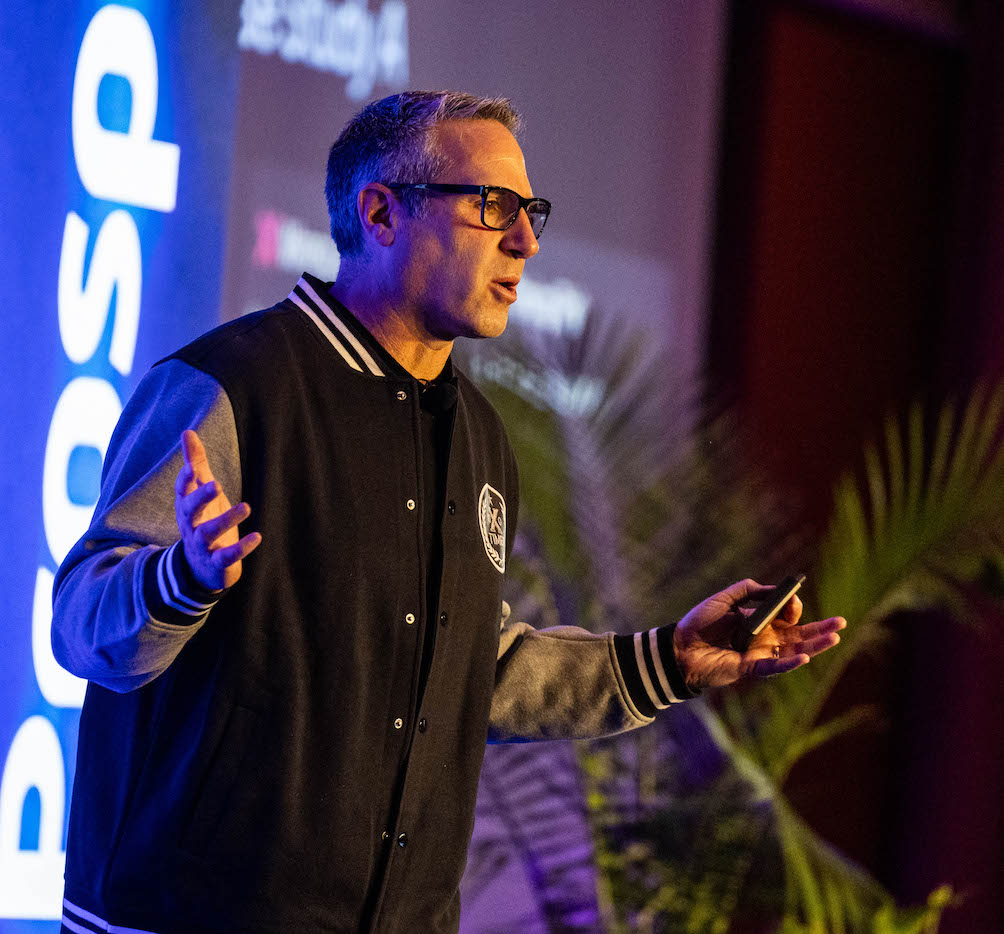 Jeff Cohen Challenges Attendees to Lead
Jeff Cohen, chief business development officer at Skai, revealed during his morning keynote that 165,000 new sellers joined Amazon in 2025. Its sounds like a lot, but it’s actually the lowest number in a decade—down 44% from last year.
It means that fewer sellers than ever are trying to compete on Amazon. That said, there are more than 100,000 sellers today who are now making $1 million or more. That is up 67% from just four years ago.
“The uncomfortable truth is that the middle is actually disappearing,” Cohen said. “You’re either becoming a leader who’s capturing more traffic, more sales, and more profit; or you’re becoming a lagger, who is about to find out that good enough isn’t good enough anymore.”
On Walmart and Amazon
“Walmart is growing two times as fast as Amazon,” Cohen added. “Amazon is still larger when we look at absolute dollars, but Walmart is clearly winning market share. And here’s why it matters; When you look at the combined Amazon and Walmart, they represent 89% of the total retail media dollars being spent. There’s two players. Everybody else is fighting for the 11%.”