
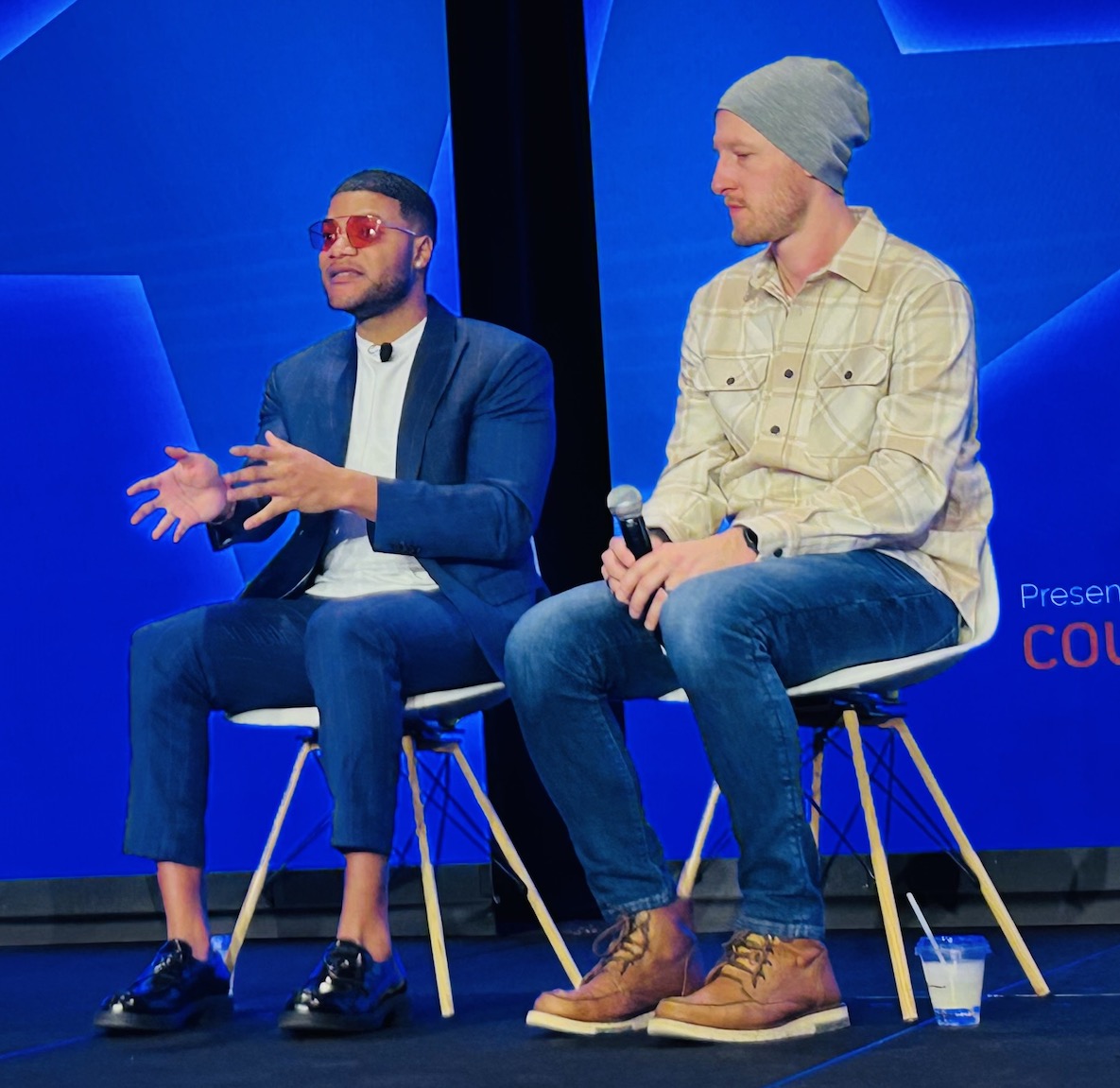

LAS VEGAS – A great product is essential, but it’s not enough unless you build the brand. Darrell Spencer, founder of Crowned Skin (pictured above left), told Prosper attendees last month about his meticulous social media strategy that builds the brand, focusing on authenticity above all. After all, a drift into inauthenticity can sink a campaign and damage a brand.
“Heavily AI-generated or over-photoshopped product imagery is one of the quickest ways for a brand to appear inauthentic,” cautions Josh Hall, founder, Micromercial. “Customers want to see the actual product being used by a real person in a believable situation.”
What passes for authentic in the social media world of 2026?
“When building out video posts and advertising, we look at authenticity as a pretty simple formula; Real humans connecting with real emotions. We don’t just spotlight a product and say, “Hey this solves your problem—buy this!” We give them a real reason to stop and believe that this product is a community of like-minded people who feel the way you do (because it is!) When the timing and the community is right, the connection is undeniable.” — Corey D. Brown, founder, buffaBrand (pictured above at Prosper in Las Vegas [far right] with Darrell Spencer)
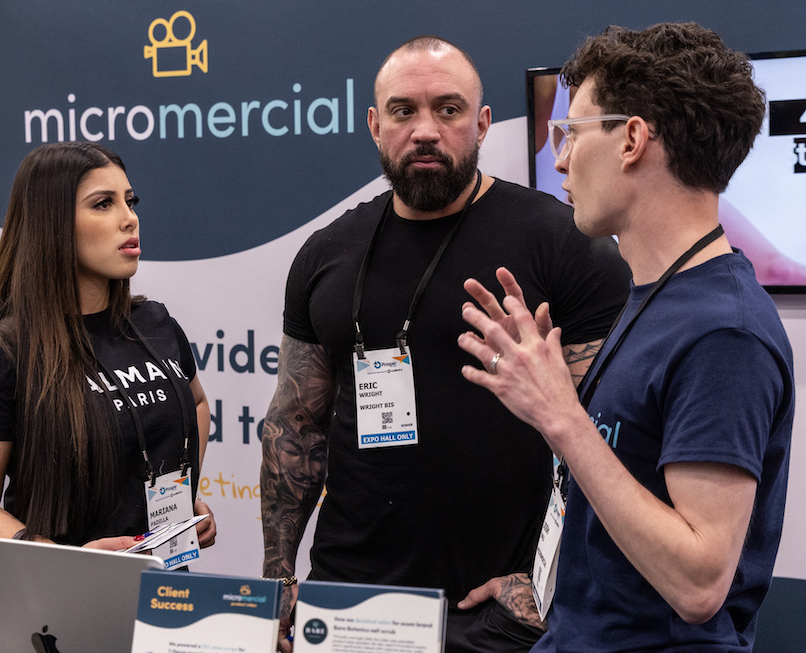 “A growing trend we’re seeing and doing—even among some Fortune 500 brands—is handheld product video, which gives content a more human feel, as if it was captured naturally rather than through an overly polished, ‘too perfect’ production. If you would have told me back in 2018 when I started Micromercial that our biggest clients and projects would ask us to set down our expensive gimbals and camera rigs and do their shoots completely handheld, I would have thought you were nuts.” — Josh Hall, founder, Micromercial (pictured far right)
“Authentic content doesn’t feel like it’s trying. Authenticity is about telling the truth. When influencers review products and it lands as genuine, it’s because their motivation feels pure. They’re sharing a real opinion because they’re excited and they have to tell somebody—not because they’re reading a script. The same is true for brands. The best branded content is honest about who the brand actually is, not trying to fit in or sound like everyone else. That takes real risk. Humans are remarkably good at detecting sincerity, and the content that performs best, whether it comes from a creator or a brand, is almost always rooted in something true. You can’t really fake that. The audience always knows.” — Rob Wiltsey, executive producer, VideoFresh
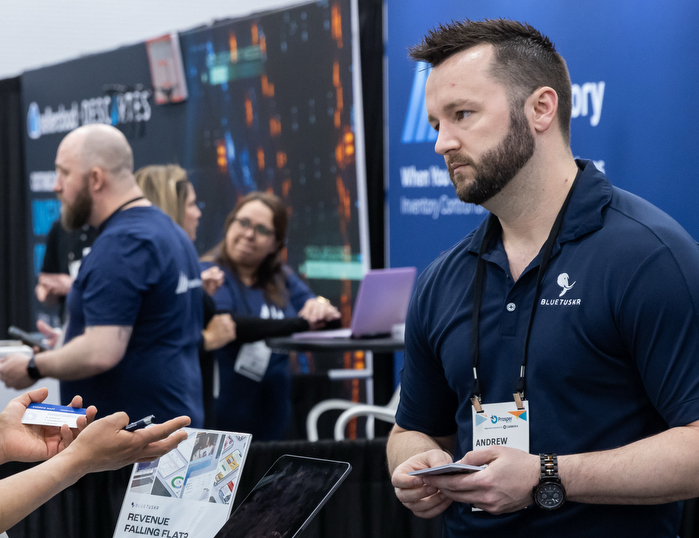 “Authentic social content feels like it was created by a real person in a real moment…shot on a phone, minimally edited, and centered around a real experience rather than a polished sales pitch. This works because people trust people more than businesses, and overly-produced content immediately signals ‘advertisement’ which most users instinctively scroll past. Inauthentic content, on the other hand, tends to be overly scripted, heavily edited, and too polished, which strips away the human element and makes the message feel biased or manufactured rather than believable.” — Andrew Maffettone, founder, BlueTuskr
“On social media, people follow people, not brands—so be a person. Tell your story. Talk about the pain that your shopper feels, and why your product uniquely solves it. People, especially Gen Z, have an instant nose for inauthenticity. They scroll right past it. Inauthentic is sounding like a brand or a corporation as opposed to a person. It’s not being vulnerable or telling a story. It’s not taking any risks. The era of perfect and polished was already ending. AI will only accelerate that – people will seek out human imperfection the way they seek out artisan crafts.” — Monte Desai, founder, Pixii
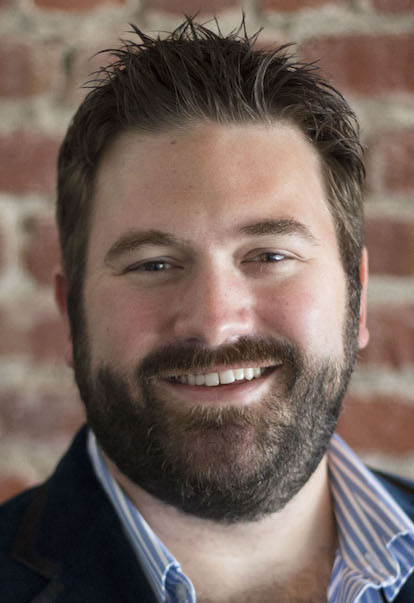 “Modern buyers, especially younger audiences, grew up consuming a very different kind of media and advertising than previous generations. Social media in particular has created a comfort with content that feels more like person-to-person communication rather than a traditional, produced commercial.
“There’s also real nuance across platforms when it comes to what ‘authentic’ looks like. On Instagram and Facebook, higher production quality with good lighting and clear audio still matters. But on TikTok, the opposite can often be true. i.e. more raw, unpolished content (like someone speaking directly to their phone in a car) can actually perform better.
“This shift has blurred the line between advertising and genuine recommendation. That can be powerful when creators truly believe in the product. However, when promotions are purely transactional, it starts to fall into a gray area with audiences. From my experience using these channels, the creators who take the time to vet products before promoting them consistently drive better results than those with large followings who will promote anything for a fee.” — David Hewlett, owner, SmartLabels
“The best thing about authenticity is that it comes off as ‘from the heart’ and by definition, imperfect. A video for example that is too perfect, reeks of rehearsal and perfection. A raw video with unrehearsed imperfections speaks more to viewers through relatability. Especially when AI is polluting the consumption space, authenticity is an important way forward to differentiate yourself.” — Charles Chakkalo, Brooklyn, N.Y.-based entrepreneur (www.CharlesTheSeller.com)